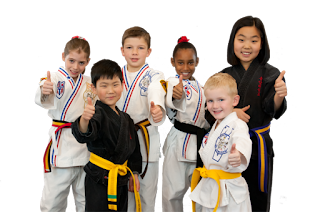
Martial arts is a very helpful addition to a healthy lifestyle. The mental and physical training necessary to be successful in any martial art will give students helpful skills they can apply to a number of other facets of their lives. With so many martial arts schools in even the smallest cities it may be a overwhelming task for parents to evaluate them and figure out what is the best martial art for their kids. Although there's no single martial art that is best suited specifically to all kids there are some which are more suitable than others. Some styles may focus more on the physical tournaments and preparing for them, while others may have an increased emphasis on character and self esteem developing. Furthermore two schools that provide the same style will teach that style distinctly, setting greater emphasis on different aspects of the style, for example mastering the formal movement patterns vs a focus on the sparring aspects. In this short article we hope to help you with some information regarding the best martial art for kids.
Firstly you being a parent have to be sure you understand the reason you are searching for a martial art for your kids. There are a number of skills to be acquired through martial arts, such as self-defence, fitness improvements, teaching self-confidence, or training to compete in competitive events.
While most if not all martial arts are in some ways acceptable for kids, the same can't be said for all schools or coaches. That is the reason why the initial step when choosing a martial art for your kids should be to determine which of the martial arts styles offered in your area are most suited for your kids, and then assess the schools within driving distance, the instructors in those schools and then the type of training they provide to both students and to instructors.
Begin by exploring several of the schools found in your community to determine what their primary styles are. The World Wide Web is an excellent resource for this as you can get a quick summary of the tenets, history and styles involved with each individual martial art. Consider not only your goals for your kids, more self-confidence or building physical strength for instance, but also the skills of your child when deciding which martial arts may be best suited for them. Judo and mixed martial arts both have some focus on grappling, which is locking or pinning opponents down. So these may not be the best martial arts for kids which are claustrophobic. On the other hand these styles will probably be great at helping your child build their physical strength and stamina.
Once you've a list of styles that could be right for your kids, start calling the schools in your neighborhood that instruct those styles. The research should match up with the details that the school supplies. For example, Taekwondo has only two recognized branches, the Kukkiwon/World Taekwondo Federation branch and the International Taekwon-Do Federation branch. If a Taekwondo school can't verify that they are associated with one of these organizations then their training, and the belts they grant to students, may not be valid or authentic. Inquire if they have programs created specifically for children, or if the children are grouped into a general class. If your kids are intimidated when in a group of older kids, teens or adults then perhaps a general class may not be best suited for them. Find out how many students and instructors are in each class, as a high student to teacher ratio will reduce the amount of time your kids will have with the instructor for one on one training. Ask if the instructors have certifications in first-aid or child education. Find out if the schools have formal training classes for their coaches, to train them the way to teach. Keep in mind that being a champion at a sport doesn't mean that a person can teach well; consider the number of great hockey and football players have experienced stunningly poor coaching careers. Find out how much experience the master or senior teacher has with kids. Get an idea of what ongoing costs should be to go to the school, which includes items such as promotion testing fees, uniforms, and additional equipment needs like arm and shin guards for fighting practices. Find out just how long the school has been in business, how long it's been at its existing location and whether the school gives back to its neighborhood through fundraising events or group volunteer activities. These things are important indications of the commitment level that the instructors and masters have to the school.
Now that you've found a school you have to inspect the physical location itself. The physical location of the school or the equipment the school uses may not be tolerable to you once you actually see it. More than likely you are going to want to visit the school without your children, in the event that they may be anxious to begin training there and you determine that you are not comfortable with the school. A number of schools will allow you to view or even participate in a free class, to help you get a better appreciation of the teaching style and use of the facilities. Introducing your kids to the school should be done only after you are satisfied with the school, the style and the level of instruction that your kids will receive.
Other Tips:
Children can be more committed to the martial arts training if it becomes a family activity. To help your kids be more dedicated to physical activity outside of school you could consider signing yourself up for family martial arts classes.
Many schools emphasize discipline and respect for parents, instructors and elders. Practicing this respect at home may require your reinforcing its importance away from the school.
The history of the martial art and/or the club itself, the grand-master or the organizations the club is part of may be required learning at the school that your kids go to. Be sure to help your kids with some research into these aspects.


